



A Jugalbandi of Brick and Concrete: Rangmanch House in Solapur
Rangmanch House in Solapur blends brick and concrete volumes to create a climate-responsive multigenerational home inspired by music, tradition and vernacular architecture.
A Jugalbandi of Brick and Concrete: A Multigenerational Home in Solapur
Rangmanch House, Solapur, Maharashtra Located in Solapur, Maharashtra, Rangmanch House stands on a 355 sqm plot and is designed for a small multigenerational family comprising a couple, their two children, and aging parents. The spatial program reflects the family's belief in Vastu Shastra, incorporating three bedrooms along with essential living spaces. A unique influence on the design came from the children’s deep interest in Indian classical music, leading to the creation of a dedicated space for practice and intimate performances within the house.
Context and Site Planning
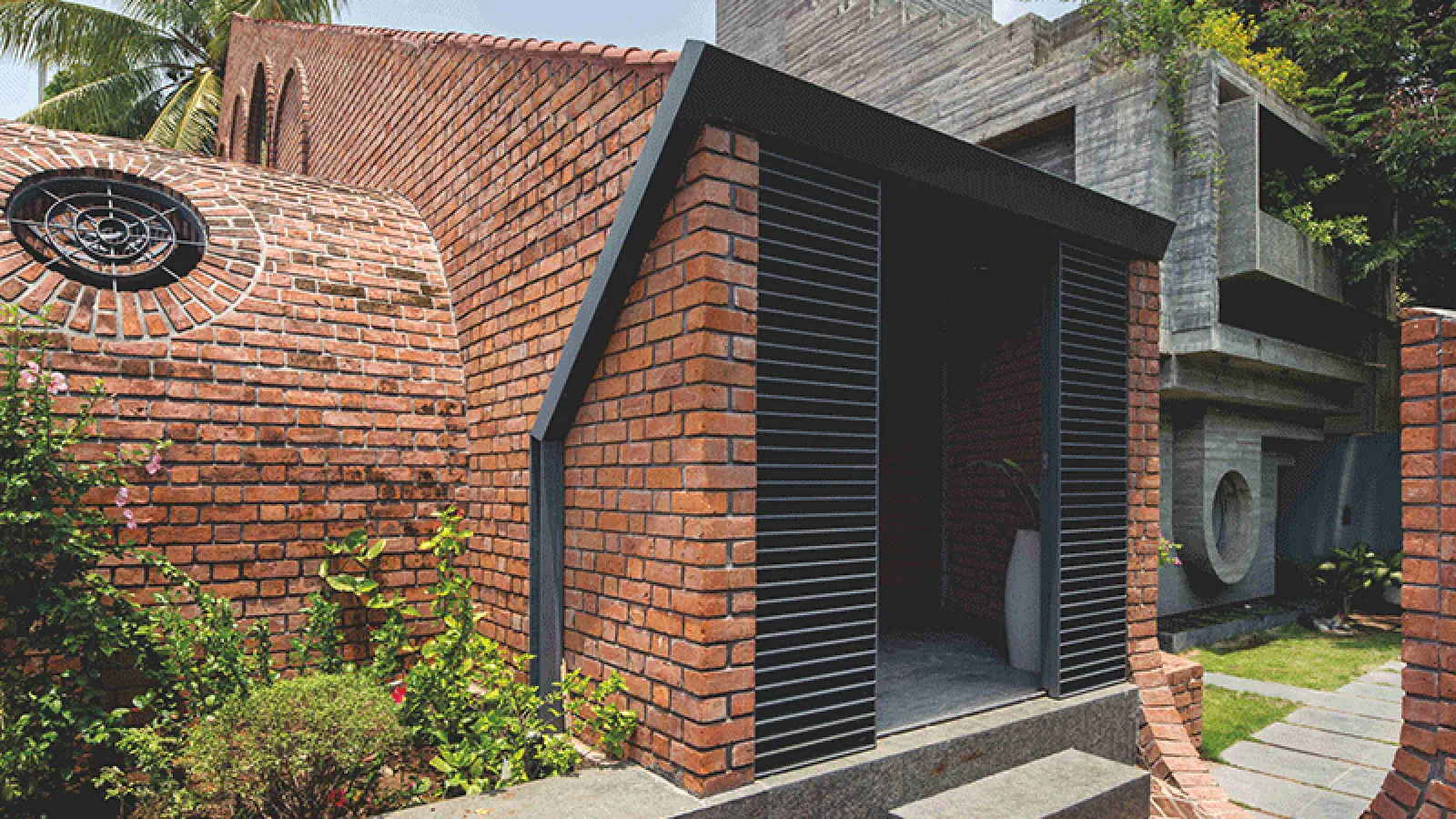
The final layout emerged from a careful balance between the client’s expectations and the site’s contextual constraints. The south-west corner of the plot offered greater openness, while the north and east sides were constrained by surrounding development. Initially, the house was conceived as an L-shaped volume, enclosing the north-east side for privacy and opening toward the south-west through verandahs that extend into a large garden. However, due to the client’s insistence on placing a bedroom in the south-west corner according to Vastu principles, a cuboidal concrete block was added to the design. This resulted in a composition of two distinct architectural volumes: The original L-shaped brick block A newly introduced concrete cuboid
Courtyard and Passive Design
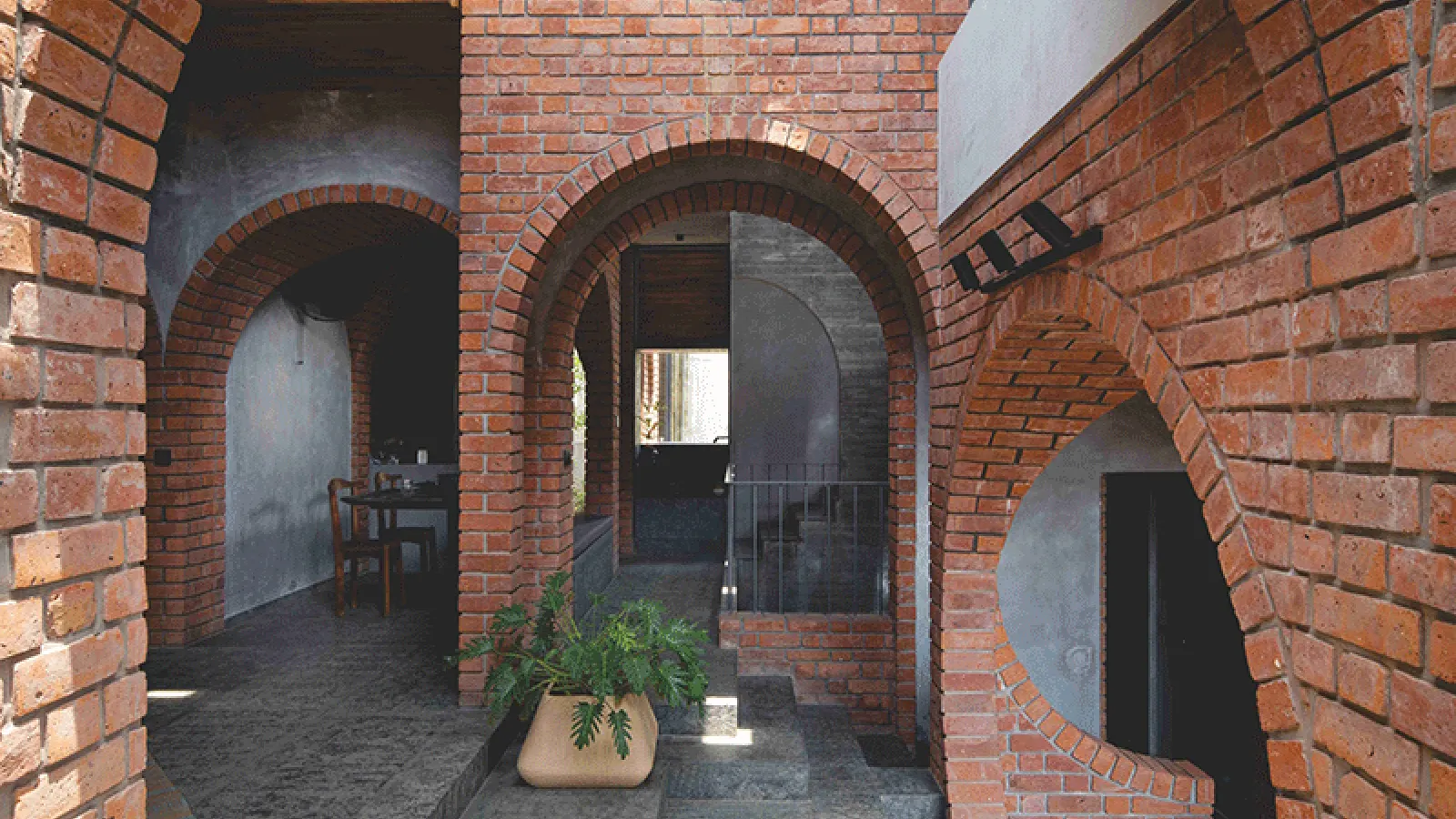
Positioning the cuboidal block in front of the L-shaped volume creates an open-to-sky L-shaped interstitial zone between them. Within this space, a central courtyard connects the two volumes both visually and physically. The courtyard integrates a staircase that links different levels of the home while allowing natural light to filter through a vertical shaft. Other parts of the interstitial zone remain open to the sky, especially toward the south and west. The southern opening acts as a wind-catcher, channeling cool air into the courtyard where a waterbody helps reduce temperature before distributing air throughout the house. Warm air escapes through upper openings, while the combination of:
- South courtyard
- Central courtyard
- Skylights
- Wall openings
ensures natural daylight and passive ventilation throughout the day.
Interior Spatial Experience
To create spatial continuity and a cohesive identity, key functions such as:
- Living room
- Kitchen and dining
- Family space
- Study
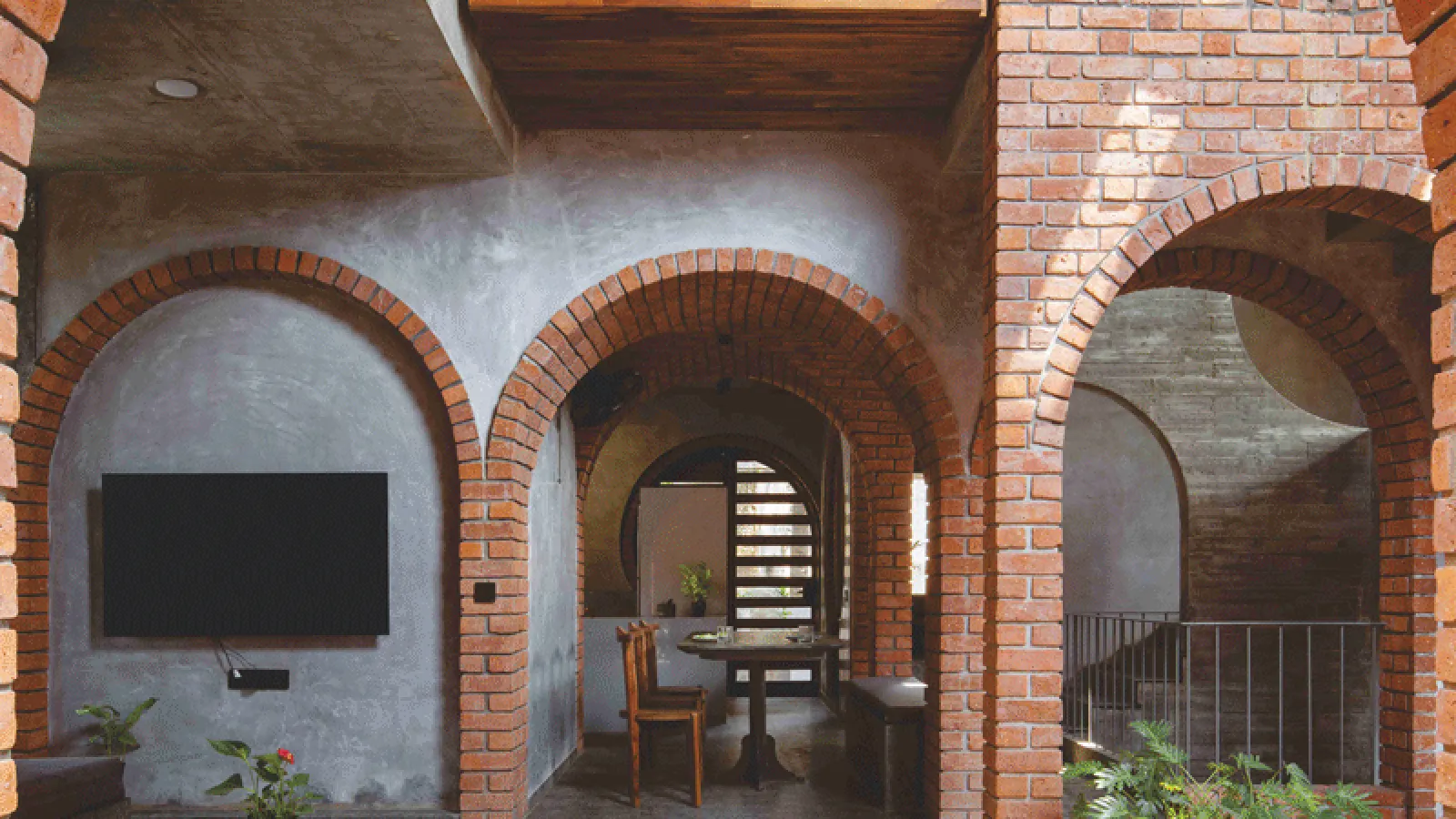
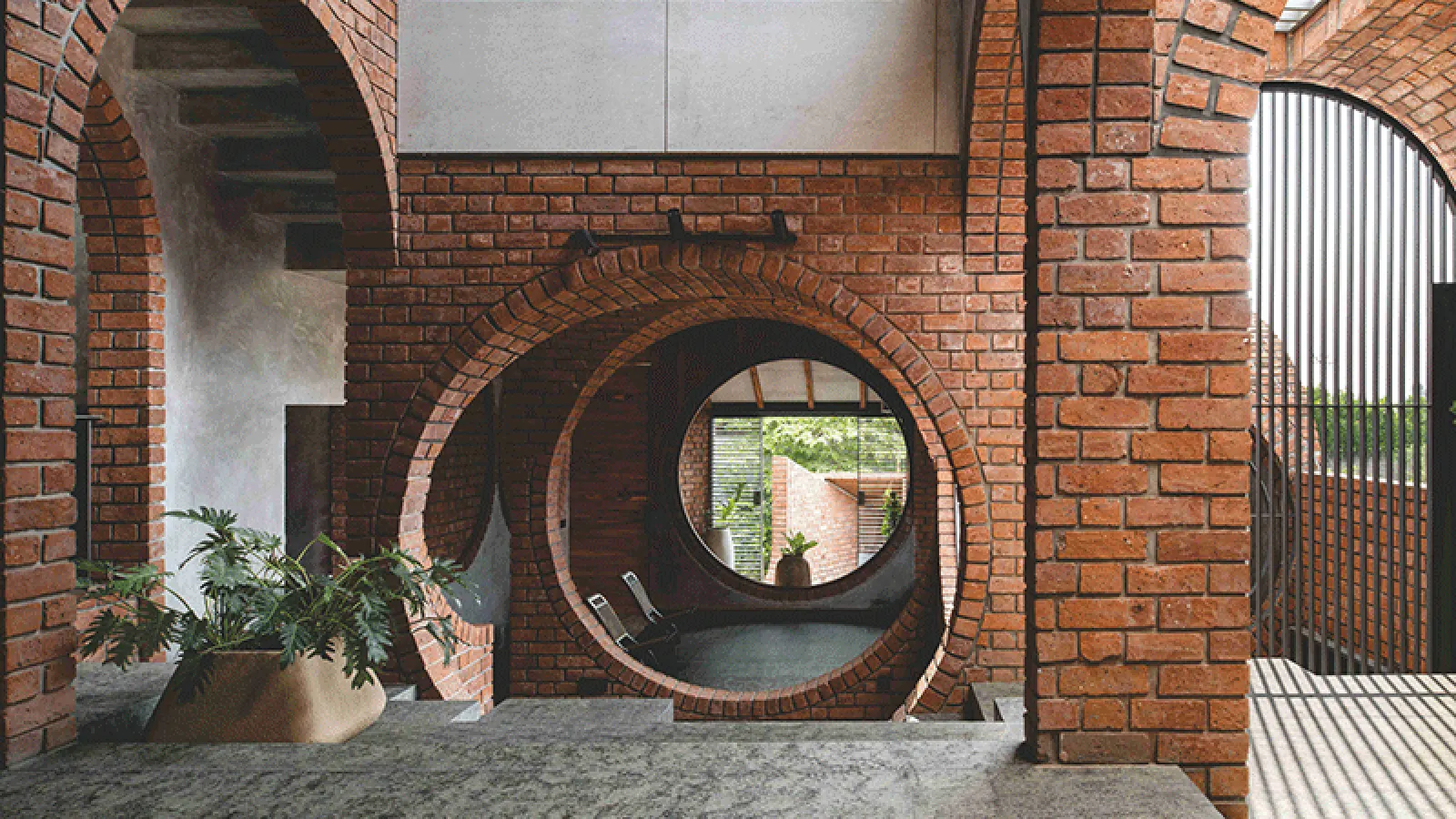
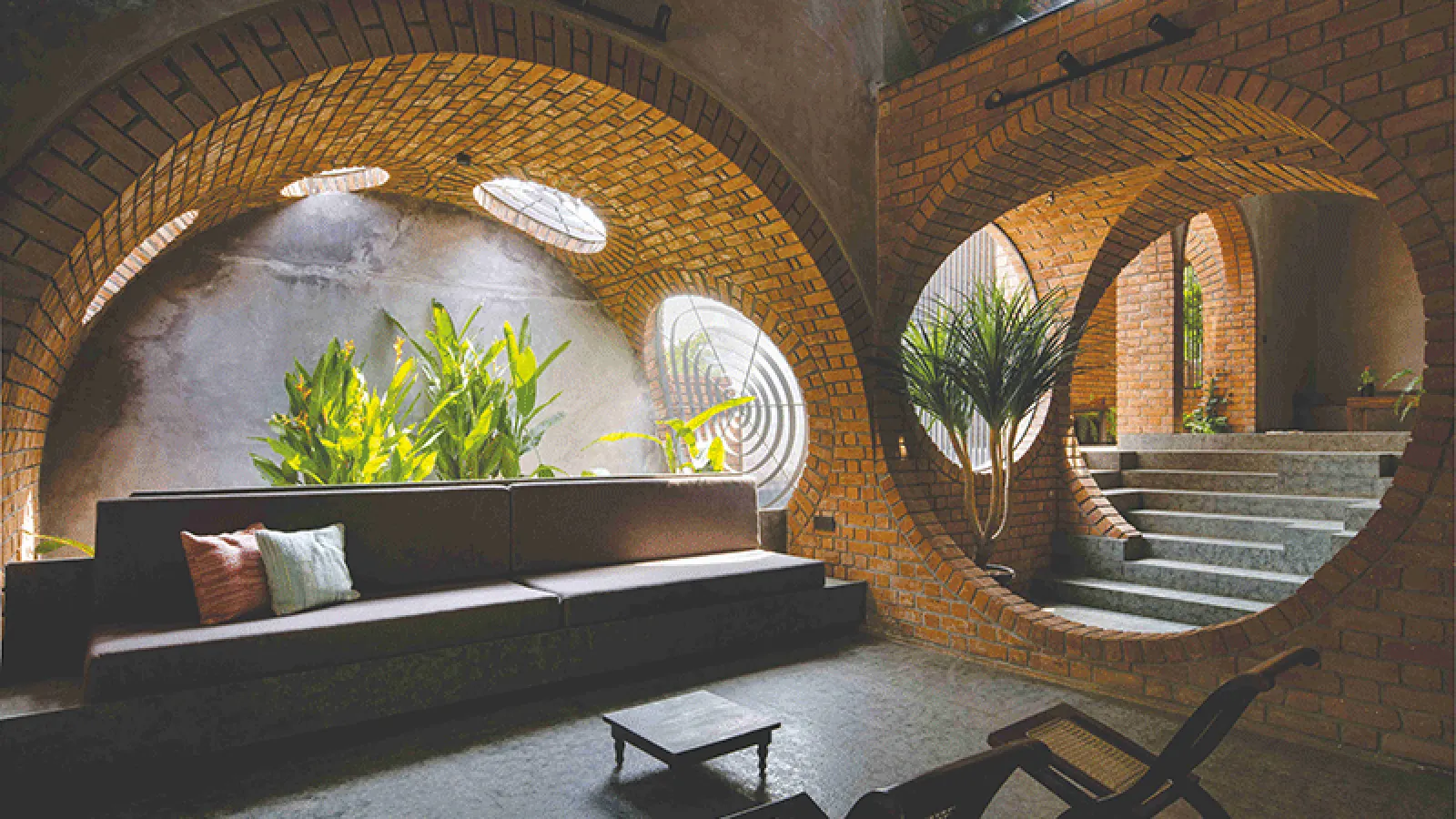
are arranged across staggered levels. These inward-oriented spaces create layered visual connections along the central staircase. On the ground floor, both formal and informal living areas extend into a shared courtyard that transforms into a performance space known as “Rangmanch.” The stepped seating around this space supports intimate musical baithaks, performances, and family gatherings, reflecting the cultural interests of the family.
- Architecture: Brick Meets Concrete
Although the internal layout follows a common grid, the two architectural blocks express distinct design languages.
L-Shaped Brick Block
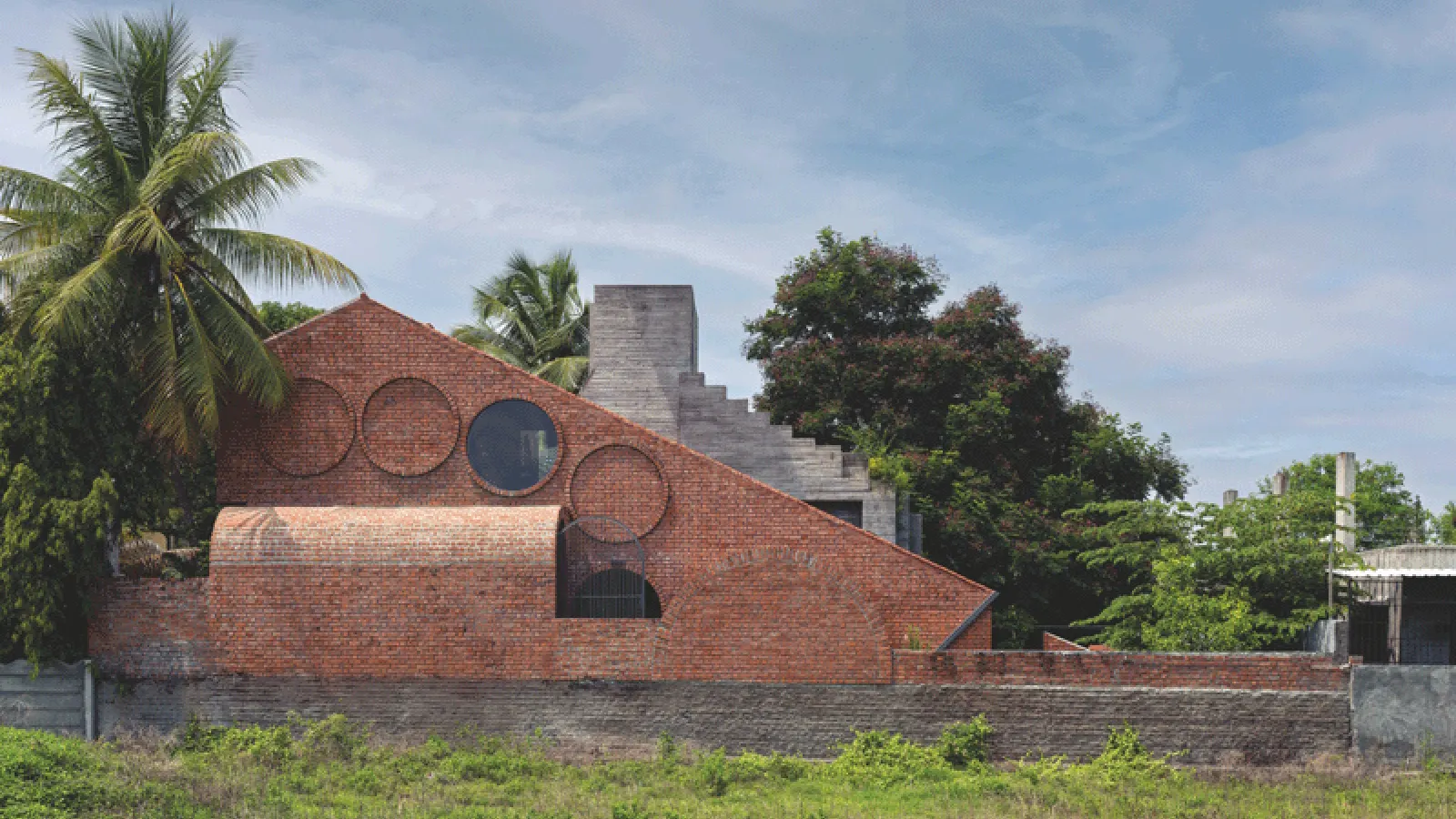
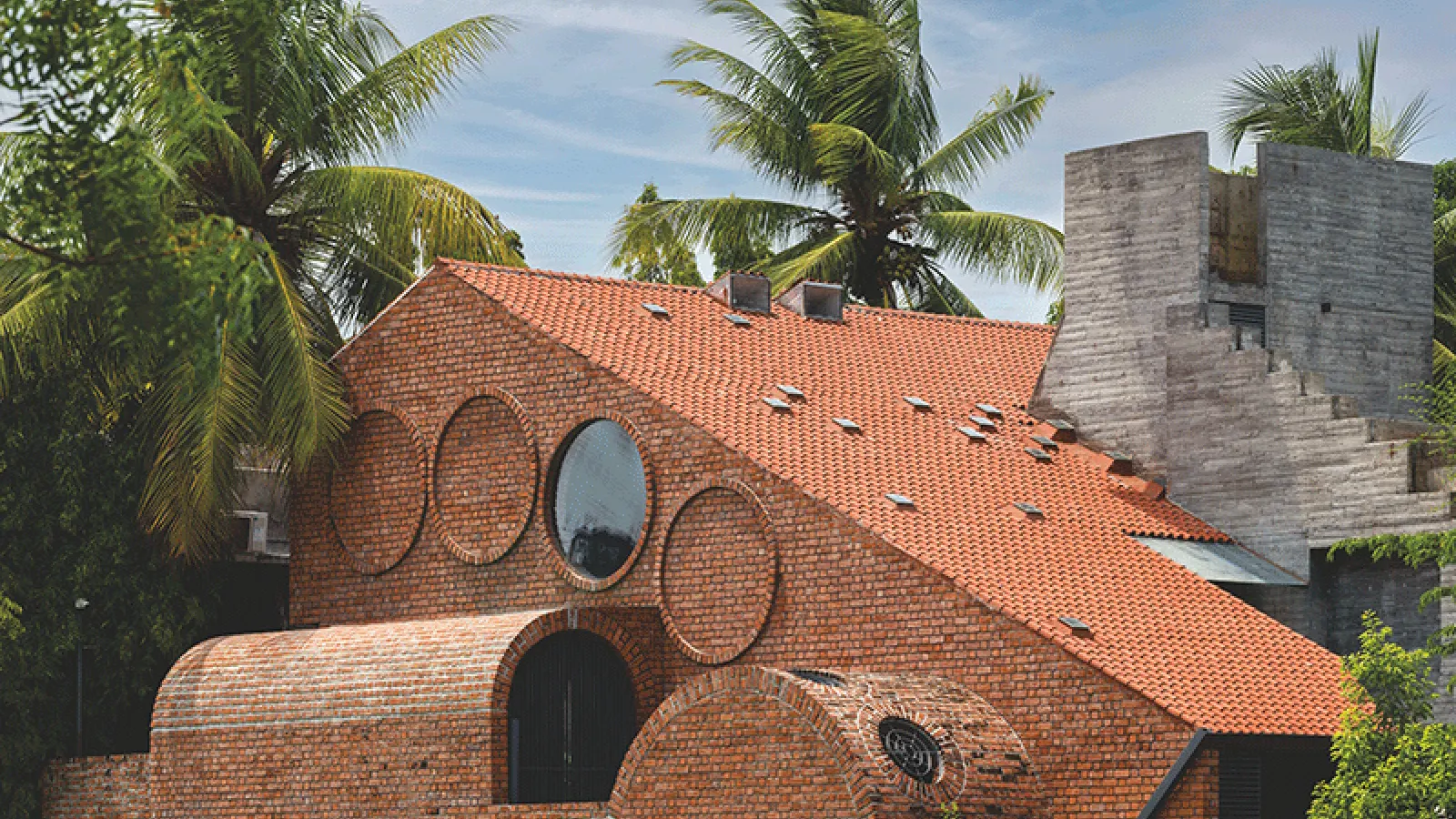
This portion of the house is defined by: Circular openings
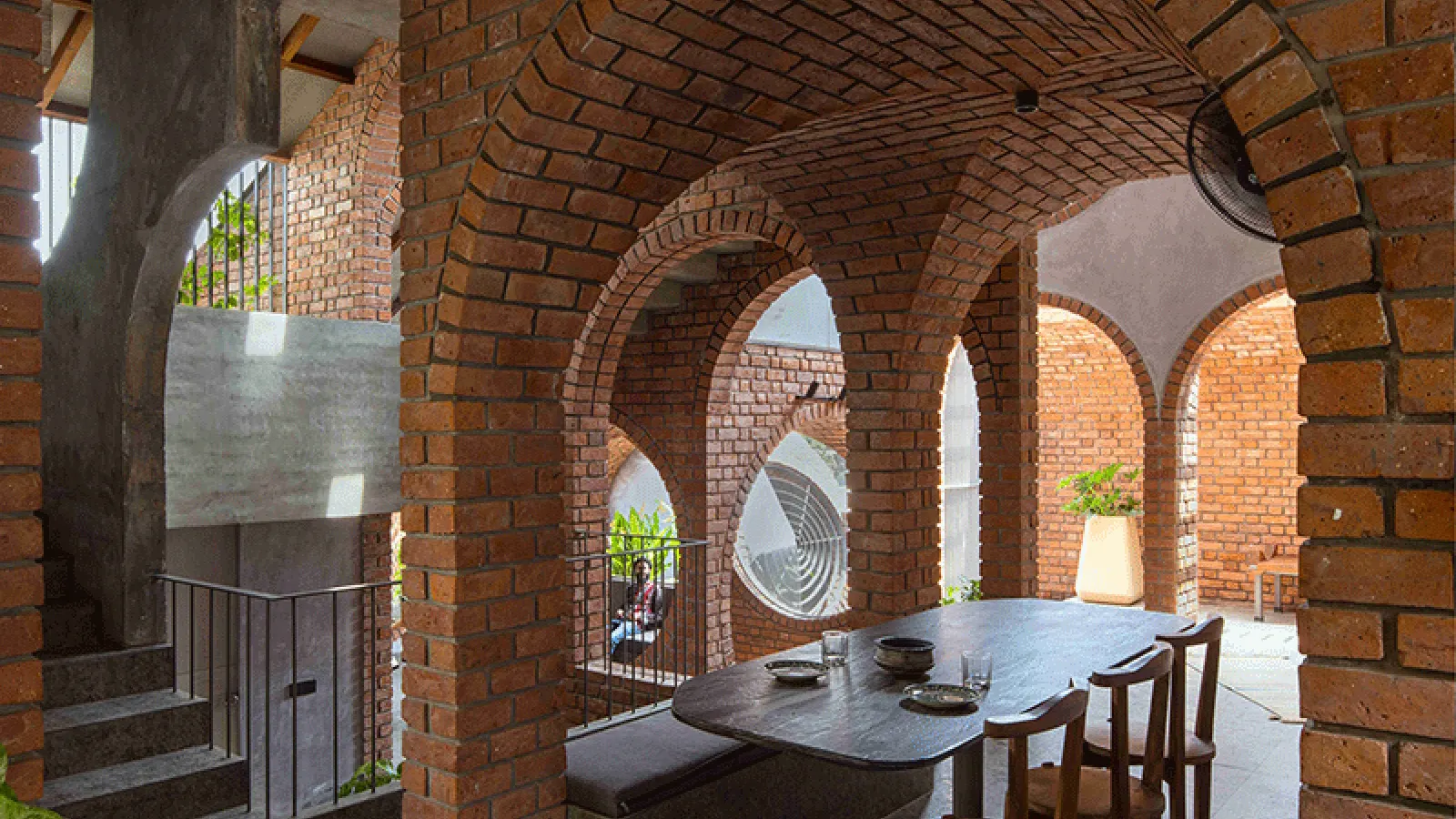
- Arches
- Vaults
- Niches
These elements introduce softness, rhythm, and spatial richness.
Concrete Cuboidal Block
As the brick structure meets the concrete volume, the geometry of openings transforms:
- Arches become straight lines
- Curves transition into planar surfaces
- The material palette reinforces this contrast:
- Brick brings warmth, tactility, and curvature.
- Concrete introduces order, solidity, and stillness.
Despite their differences, the two blocks remain unified through light, movement, and visual continuity, with the courtyard and staircase mediating between intimacy and openness.
Cultural and Architectural References
The design also reflects on the architectural identity of Solapur, drawing inspiration from its historic residential typologies. Before colonial influence, the city’s urban fabric was dominated by Wada Architecture, characterized by:
- Climate-responsive layouts
- Inward-facing courtyards
- Local materials and craftsmanship
Over time, these gave way to more symmetrical layouts and industrial materials introduced during colonial and post-colonial periods. The L-shaped brick block reinterprets these traditional sensibilities with:
- Exposed brick walls
- A sloping roof that nearly touches the ground
- Locally sourced materials
- Craftsmanship by local artisans
In contrast, the adjoining concrete cuboid draws inspiration from the architectural language of colonial and post-colonial periods. Its 200mm exposed concrete walls reinterpret stone through poured concrete, with layered surfaces and subtle offsets forming a distinct Indo-Brutalist expression. The structure concludes with a planted terrace, offering a quiet contemplative space within the composition.
A Jugalbandi in Architecture
The two volumes—shaped by constraints yet improvising in their own architectural rhythms—create a dynamic duality. Much like a ‘jugalbandi’ in classical music, the house brings together two contrasting expressions:
- One open, expressive, and celebratory
- The other calm, introverted, and restrained
Together they demonstrate how architecture can embrace contrast, complexity, and cultural memory to create a rich and layered spatial experience.