


India’s Real Estate Market Enters New Growth Phase as Housing and Office Demand Strengthen
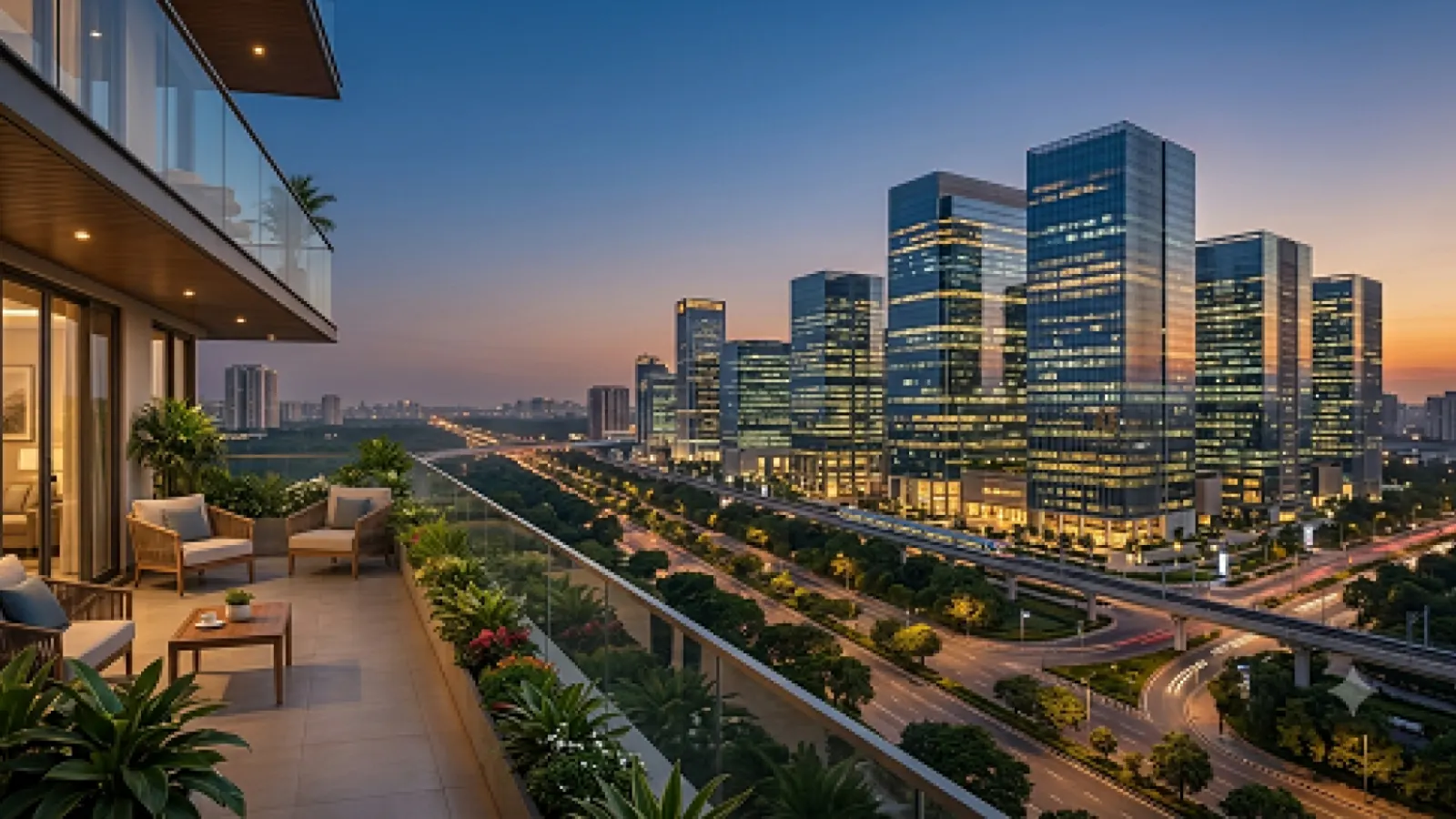
Delhi NCR: India’s real estate market is entering a new phase of growth in 2026, with momentum visible across both residential and commercial segments. The shift is being shaped not only by overall demand but also by changing preferences around premium housing, office quality, connectivity, lifestyle, sustainability and long-term value.
Residential buyers are allocating larger budgets to homes, while corporate occupiers are looking beyond location to factors such as building quality, flexibility and surrounding business ecosystems.
Together, these trends are creating stronger links between employment centres, commercial development and residential demand.
Premium Homes Account for Growing Share of Residential Sales
According to JLL data cited in the supplied market analysis, residential sales across India's top seven cities increased 8% year-on-year to 70,631 units in Q1 2026.
Homes priced at ₹1 crore and above accounted for 71% of sales, compared with 59% during the corresponding period a year earlier.
The shift indicates growing demand for higher-value residential properties as buyers place greater emphasis on location, space, planning, amenities and the quality of the surrounding environment.
Arjun Gehlot, Director, Ambience Group, said homebuyers are increasingly treating residential purchases as long-term lifestyle decisions.
According to him, space, planning, location and the surrounding environment are becoming more influential in purchase decisions, while higher budgets are supporting continued demand for luxury housing in established urban markets.
Office Absorption Reaches 45.5 Million Sq. Ft. in H1 2026
Commercial real estate is also experiencing significant activity.
According to CBRE data cited in the supplied material, India recorded 45.5 million sq. ft. of office absorption during H1 2026, described as the highest half-year figure recorded.
Global Capability Centres (GCCs) accounted for approximately 43% of leasing, highlighting their growing influence on India's office market.
The expansion of GCCs is supporting demand for Grade-A office developments across major business centres.
Commercial and Residential Growth Increasingly Connected
Sandeep Chhillar, Founder and Chairman, Landmark Group, said India's residential and commercial real estate sectors are increasingly reinforcing each other rather than developing independently.
He noted that occupiers are evaluating factors such as connectivity, flexible floor plates, sustainability credentials and the broader business ecosystem surrounding an office development.
Gurugram is one example of this convergence, where the growth of corporate infrastructure is also supporting residential demand across premium micro-markets.
Chhillar also cited projections suggesting GCCs could grow by 41% by 2030, potentially creating additional demand for Grade-A office space.
Launches Above ₹1 Crore Rise 45%
Developers are responding to the changing composition of residential demand by increasing the supply of premium housing.
According to JLL, launches of homes priced above ₹1 crore increased 45% year-on-year in Q1 2026.
Within this category, launches in the ₹1.5 crore to ₹3 crore segment increased 134% year-on-year.
The increase indicates a significant shift in new residential supply towards higher ticket-size categories.
Buyers Focus on Location, Quality and Developer Credibility
B.K. Malagi, Vice Chairman, Experion Developers, said the residential market continues to be driven by end-users, but buyers are also becoming increasingly conscious of the long-term value of their investment.
Factors including location, rental potential, construction quality and the future growth prospects of a micro-market are becoming increasingly important.
As property prices and ticket sizes rise, buyers are also placing greater emphasis on execution, timely delivery and developer credibility.
Neighbourhood Becoming Part of the Home-Buying Decision
Prateek Tiwari, Managing Director, Prateek Group, highlighted how buyers are looking beyond the apartment itself when assessing residential value.
Neighbourhood quality, connectivity, open spaces and everyday convenience are becoming important parts of the purchase decision.
This trend is supporting demand for strategically located residential developments in established markets, where buyers can assess both immediate usability and the longer-term potential of the location.
Luxury Housing Moves Towards Experience-Led Living
The meaning of luxury housing is also evolving.
Dr. Gautam Kanodia, Founder, KREEVA and Kanodia Group, said buyers increasingly associate luxury with the overall experience of living rather than simply the physical size or value of a property.
Privacy, architecture and design, wellness facilities, common spaces and location are increasingly contributing to how buyers evaluate luxury residences.
This is encouraging developers to position premium projects around a broader lifestyle proposition.
Jobs, Offices and Housing Create a Connected Growth Cycle
Ashwinder R. Singh, Vice Chairman, BCD Group and Chairman, CII Committee on Real Estate (NR), highlighted the relationship between employment generation, commercial development and residential demand.
According to him, jobs create demand for offices, office clusters generate economic activity and those clusters subsequently create housing demand.
Infrastructure development can then expand the geography of this growth, opening additional residential and commercial locations.
The participation of end-users, businesses and institutional capital at the same time is contributing to a more interconnected real estate ecosystem.
Premium Housing Continues to Gain Traction
Karan Khanna, Founder, Apex Acreages, said premium and luxury residential projects are gaining traction alongside continued activity in the wider housing market.
CBRE data cited in the supplied material recorded more than 61,000 residential sales during Q2 2026, alongside a growing share of high-end apartment transactions.
According to Khanna, location, product quality, amenities and long-term value are becoming increasingly important in buyer decisions and are also influencing how developers position projects and investors evaluate opportunities.
A More Deliberate Real Estate Market
A common trend across India's residential and commercial markets is the emergence of a more selective buyer and occupier.
Homebuyers are increasingly assessing location, connectivity, lifestyle infrastructure, construction quality, developer credibility and future value, while office occupiers are focusing on connectivity, sustainability, flexible spaces and access to established business ecosystems.
The interaction between employment, commercial development, infrastructure and housing demand suggests that India's real estate market is increasingly being shaped by how locations are expected to perform over the longer term rather than solely by their current positioning.
Key Highlights
- Top Seven Cities Residential Sales: 70,631 units in Q1 2026
- YoY Residential Sales Growth: 8%
- Homes Above ₹1 Crore: 71% of Q1 2026 sales
- Homes Above ₹1 Crore in Previous Year: 59% of sales
- Office Absorption: 45.5 million sq. ft. in H1 2026
- GCC Share of Office Leasing: Approximately 43%
- Projected GCC Growth: 41% by 2030, as cited
- Launches Above ₹1 Crore: Up 45% YoY in Q1 2026
- ₹1.5–3 Crore Launch Segment: Up 134% YoY
- Q2 2026 Residential Sales: More than 61,000 units, according to cited CBRE data
- Key Residential Drivers: Location, space, amenities, quality and developer credibility
- Key Commercial Drivers: GCCs, connectivity, flexible offices, sustainability and business ecosystems


-preview.webp)

-preview.webp)